We now offer x-ray appointments at our Phenix, Charlotte, Rideau Valley, Nepean, Kanata, and Hunt Club clinics. Please check location availability before visiting.

Request an Appointment
Does a gynecological imaging exam hurt?
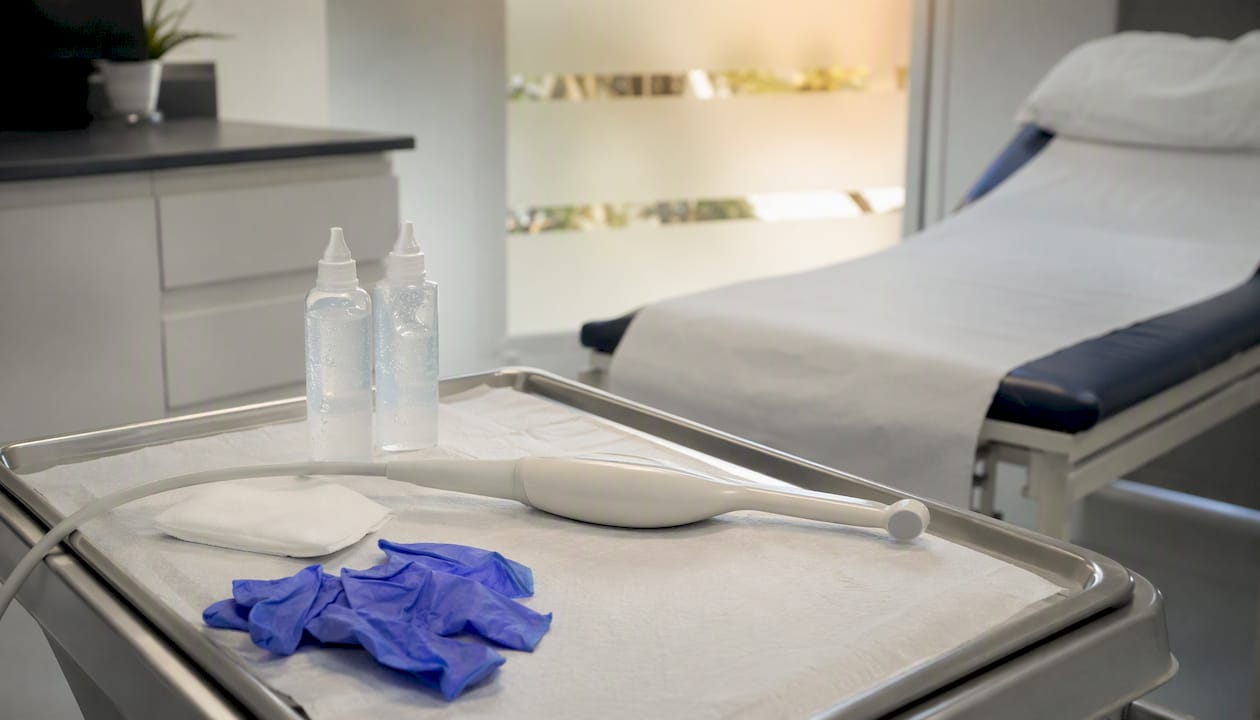
For most people, pelvic ultrasound scans are uncomfortable at most, not painful. Whether you have been referred for a transvaginal ultrasound, a transabdominal ultrasound, or mammography, the procedure is designed to be tolerable, and the sonographer can adjust or stop at any point.
Here is what you should know before your appointment:
- Transvaginal ultrasound uses a small, smooth probe inserted gently into the vagina to image the uterus and ovaries from close range.
- Transabdominal ultrasound uses a handheld probe moved across your lower abdomen, with no internal insertion.
- Mammography uses brief, firm compression of breast tissue between two plates.
- None of these scans use X-ray radiation (ultrasound uses sound waves), and all are considered very safe.
Canadian Diagnostic Network (CDN) has over 30 years of experience providing diagnostic imaging across Ottawa and eastern Ontario, with a team of more than 150 radiologists and technologists. Results are typically available within a few days.
Pro Tip: You can ask the sonographer to pause at any time. At many clinics, including CDN locations, you may also be offered the option to insert the transvaginal probe yourself, which many patients find reduces anxiety.
Key takeaways
Pelvic imaging scans are typically uncomfortable rather than painful, and you can ask to stop or pause at any point during the procedure.
| Point | Details |
|---|---|
| Usually not painful | Most patients feel pressure or mild discomfort, not pain, during pelvic ultrasound. |
| Scan duration | A transvaginal scan typically takes 6–15 minutes within a 15–30 minute appointment. |
| Preparation matters | Empty your bladder for transvaginal; arrive with a full bladder for transabdominal. |
| After-effects are minor | Mild lubricant discharge may occur and usually clears within 24 hours. |
| CDN in Ottawa | Cdncare offers pelvic ultrasound across 20+ Ottawa-area clinics, with results typically within 24–48 hours. |
This article is general information, not a substitute for advice from a qualified doctor. Consult a qualified healthcare professional about your own circumstances before acting on anything here.
Table of Contents
- What happens during a transvaginal and transabdominal ultrasound?
- What does a pelvic imaging scan actually feel like?
- How to prepare and reduce discomfort before your scan
- What you may notice after the scan
- When the procedure may be more painful and how staff respond
- What to expect at Canadian Diagnostic Network clinics in Ottawa and eastern Ontario
- A practical perspective on imaging anxiety
- Pelvic and breast imaging at CDN clinics in Ottawa
- Sources
- FAQ
What happens during a transvaginal and transabdominal ultrasound?
Understanding the physical steps makes the appointment much less daunting. The two scan types differ mainly in where the probe goes.
Transvaginal ultrasound — step by step:
- You will be asked to empty your bladder before the scan begins.
- You lie on your back with your knees bent, similar to a routine pelvic exam position.
- The sonographer covers the probe with a single-use, latex-free sheath and water-soluble lubricant to ease insertion.
- The probe, roughly the size of a tampon, is gently inserted a few centimetres into the vagina.
- The sonographer rotates it slightly to capture images of the uterus, ovaries, and surrounding structures.
- You may be offered the option to insert the probe yourself.
Transabdominal ultrasound — step by step:
- You will usually be asked to arrive with a full bladder. This helps push the uterus into a better imaging position.
- You lie on your back and expose your lower abdomen.
- A gel is applied to the skin, and the sonographer moves the probe across your belly.
- You feel steady pressure but no internal contact. For more detail on what to expect, see abdominal ultrasound preparation.
| Dimension | Transvaginal | Transabdominal |
|---|---|---|
| What it feels like | Mild internal pressure, possible brief cramping | Firm external pressure on lower abdomen |
| Bladder prep | Empty bladder before scan | Full bladder required |
| Typical duration | 6–15 minutes for the scan itself | 15–30 minutes total appointment |
| Common side effects | Mild lubricant discharge, rare light spotting | Temporary bloating from full bladder |
| When it may be more painful | Active pelvic pain, recent surgery, vaginismus | Rarely painful; discomfort if bladder is overfull |
What does a pelvic imaging scan actually feel like?
Most patients describe the transvaginal portion as a feeling of pressure, not pain. The probe is narrow, the insertion is slow, and the sonographer pauses between image captures. According to Guy’s and St Thomas’ NHS Foundation Trust, unless you already have pelvic pain from another cause, the scan should not be painful and is generally less uncomfortable than a cervical smear.

People who do report more discomfort tend to have pre-existing pelvic pain, recent pelvic surgery, or heightened sensitivity. Anxiety also plays a role: muscle tension can make insertion feel more uncomfortable. Knowing what to expect, and knowing you can stop the scan, tends to reduce that tension noticeably.
The internal portion of a transvaginal scan typically lasts 6–15 minutes, within a total appointment of roughly 15–30 minutes. The transabdominal scan is external and usually feels no more intense than moderate pressure on a full bladder.
How to prepare and reduce discomfort before your scan
A little preparation goes a long way. These steps apply whether you are coming in for a transvaginal, transabdominal, or combined pelvic ultrasound.
- Bladder instructions: Empty your bladder for a transvaginal scan. Arrive with a comfortably full bladder for a transabdominal scan. Your requisition or booking confirmation will specify which applies to you.
- Clothing: Wear loose, easy-to-remove clothing. You will be given a gown or drape.
- Menstruation: You can have the scan during your period. Let the front desk know when you book.
- Accessories: Bring your requisition, your health card (OHIP), and any previous imaging reports if you have them.
- Arrival time: Aim to arrive 10–15 minutes early to complete any paperwork.
- Tell the sonographer: Share any history of pelvic pain, recent surgery, or conditions like vaginismus before the scan begins. You can also request to insert the probe yourself or ask for a pause at any point. See pregnancy ultrasound preparation for related bladder and clothing guidance.
Pro Tip: Take slow, steady breaths during insertion. Relaxing your pelvic floor muscles, the same way you would when trying to release tension, reduces resistance and makes the process more comfortable. Tell the sonographer if you need a moment.
What you may notice after the scan
Most people leave the clinic feeling completely normal. A small number notice mild effects in the hours that follow.
For mild cramping, a warm compress or an over-the-counter pain reliever is usually sufficient. No special aftercare is needed for a transabdominal scan.
Contact the clinic or your referring provider if you experience:
- Severe or worsening pelvic pain after the scan
- Heavy vaginal bleeding (more than light spotting)
- Fever, chills, or signs of infection within 48 hours
- Discharge that is unusual in colour or odour
Results are typically sent to your referring provider within 24–48 hours at CDN clinics.
When the procedure may be more painful and how staff respond
Some clinical situations do increase discomfort. Knowing them in advance helps you prepare and communicate clearly with the team.
- Active pelvic infection or inflammation: The probe’s pressure can aggravate inflamed tissue. The sonographer will proceed carefully and may switch to a transabdominal approach.
- Recent pelvic or abdominal surgery: Scar tissue and post-operative sensitivity can make internal scanning uncomfortable. Tell staff before the scan begins.
- Acute pelvic pain at the time of the appointment: If you are in significant pain when you arrive, the team may adapt the technique, offer the transabdominal route, or recommend rescheduling.
- Vaginismus or pelvic floor spasm: Involuntary muscle contraction can make insertion difficult. Offering the patient the option to self-insert the probe often helps. Technologists can stop the exam on request and will never force the procedure.
- Severe anxiety: Psychological distress can heighten physical sensitivity. Consent, clear explanation, and the option to pause are standard practice.
If the transvaginal scan cannot be completed, clinically useful images can often be obtained transabdominally. Declining or stopping the internal scan is not a failure; it simply changes the imaging approach.
If pain is severe, sudden, or accompanied by fever or heavy bleeding, seek urgent medical assessment rather than waiting for routine results.
What to expect at Canadian Diagnostic Network clinics in Ottawa and eastern Ontario
CDN is Ottawa’s largest diagnostic imaging provider, with more than 20 clinic locations across Ottawa and eastern Ontario and over 30 years of experience in pelvic and breast imaging. The team includes more than 150 radiologists and technologists trained in patient-centred technique.
Results from your pelvic ultrasound are typically shared with your referring provider within 24–48 hours, supporting faster clinical decisions.
Practical logistics for your CDN appointment:
- Bring your requisition, OHIP card, and any prior imaging.
- Wear comfortable, loose clothing.
- Ask your referring provider to send the requisition directly to your preferred CDN location.
- Appointments for pelvic ultrasound typically run 15–30 minutes in total.
- Results go to your referring provider, who will contact you to discuss next steps.
If you have questions before your appointment, CDN clinic staff can answer procedural questions by phone. For ultrasound services across CDN locations, your referring provider can direct the requisition to the site most convenient for you.
A practical perspective on imaging anxiety
Many patients arrive at a pelvic ultrasound appointment having read alarming accounts online. What they find, more often than not, is a brief, manageable procedure carried out by a technologist focused on their comfort.
The patients who find the experience most difficult are usually those who did not know they could ask to pause, did not mention their history of pelvic pain, or arrived tense from not knowing what to expect. That gap between expectation and reality is something clear communication closes almost entirely.
Imaging is a tool, not a verdict. A transvaginal ultrasound gives your care team a clear picture of what is happening internally, which is what makes the mild discomfort worth tolerating. If the scan cannot be completed internally, the transabdominal route still provides useful information. Either way, you leave with something your clinician can act on.
Pelvic and breast imaging at CDN clinics in Ottawa
If you have a requisition for pelvic or breast imaging, CDN clinics across Ottawa and eastern Ontario offer pelvic and breast ultrasound appointments, mammography, and urgent care imaging. Bring your requisition and OHIP card to your nearest location. For faster access, walk-in urgent imaging is available at select CDN sites.
To book, ask your referring provider to send your requisition to a CDN location near you, or contact the clinic directly with questions about preparation or timing.
Sources
- London X-Ray Associates - Transvaginal
- Transvaginal ultrasound scan — Guys and St Thomas’ NHS Foundation Trust
- Radiology
- Endovaginal / Transvaginal ultrasound appointment preparation — Phoenix Medical Imaging
FAQ
Does a transvaginal ultrasound hurt?
For most people, it does not. You will feel pressure and possibly mild discomfort, but the scan is generally less uncomfortable than a cervical smear and should not cause pain unless you already have pelvic pain from another cause.
Can I ask the sonographer to stop during the scan?
Yes. The sonographer will stop the exam immediately if you ask, and you can request a pause at any time. You may also be offered the option to insert the probe yourself.
How long does a pelvic ultrasound take?
The transvaginal portion typically takes 6–15 minutes, with the full appointment usually running 15–30 minutes in total.
What should I do if I have pain after the scan?
Mild cramping or light spotting can occur and usually resolves within 24 hours. Contact your clinic or referring provider if you experience severe pain, heavy bleeding, fever, or signs of infection.
How quickly will I get my results at a CDN clinic?
Results are typically sent to your referring provider within 24–48 hours at Cdncare clinics across Ottawa and eastern Ontario.
Recommended
Your examination or doctor’s visit is 4 easy steps away