We now offer x-ray appointments at our Phenix, Charlotte, Rideau Valley, Nepean, Kanata, and Hunt Club clinics. Please check location availability before visiting.

Request an Appointment
OBSP clinic advantages: what you actually gain from organised screening
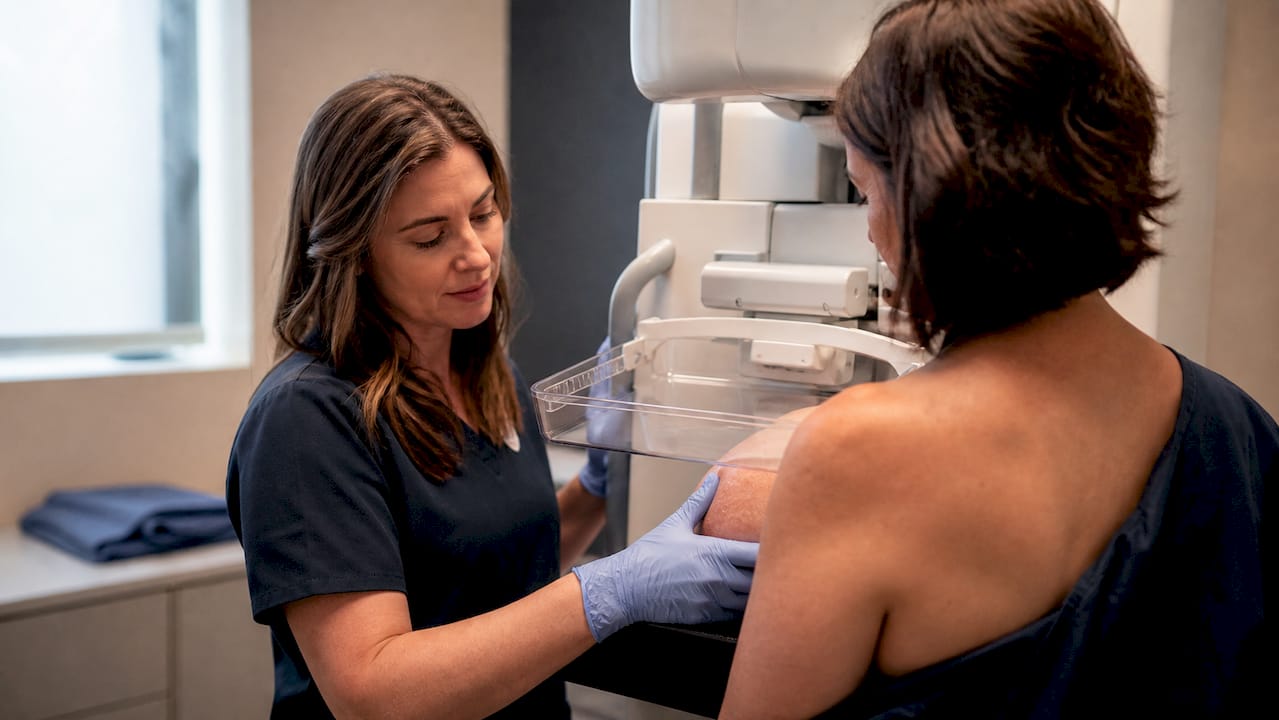
OBSP clinics give you OHIP-covered mammography with standardised quality assurance, automatic result and recall letters, and coordinated follow-up — all without needing a doctor’s referral if you are 40 or older. That combination of access, structure, and oversight is what separates organised screening through the Ontario Breast Screening Program from a one-off imaging appointment.
Here is what the programme delivers in practical terms:
- No referral needed for eligible people aged 40 and over — you can self-refer directly to an OBSP site
- OHIP covers the cost of your screening mammogram, so there is no out-of-pocket fee
- Mailed result letters for both normal and abnormal findings, with recall coordination handled by the clinic
- Standardised quality assurance protocols that apply to every participating site across Ontario
- Coordinated follow-up if your result is abnormal, including diagnostic imaging and biopsy pathways
- A long-term health record that lets radiologists compare images year over year
Ontario Health’s breast screening wait times and location tool helps you find a participating site near you. The Canadian Diagnostic Network (CDN) operates one of the largest OBSP networks in Ottawa and eastern Ontario, with results typically available within 24–48 hours.
Key takeaways
OBSP clinics give eligible Ontarians OHIP-covered, organised breast screening with standardised quality assurance, automatic result letters, and coordinated follow-up — making early detection more accessible and systematic than unorganised imaging alone.
| Point | Details |
|---|---|
| Self-referral at 40+ | You can book an OBSP mammogram without a physician referral if you are 40 or older with a valid Ontario health card. |
| OHIP covers the cost | Screening mammograms at participating OBSP sites are fully covered — no co-payment required. |
| Earlier detection matters | OBSP-adherent women were significantly more likely to be diagnosed at earlier stages; non-screeners faced substantially higher odds of late-stage disease. |
| Screening has trade-offs | Starting at 40 prevents additional deaths but also increases false positives and overdiagnosis — discuss your personal risk with a clinician. |
| Cdncare in Ottawa | CDN operates one of the largest OBSP networks in Ottawa and eastern Ontario, with results typically within 24–48 hours across more than 20 locations. |
Table of Contents
- Who qualifies for OBSP — and what changes at age 40?
- What OBSP clinics actually provide
- How OBSP screening is linked to earlier diagnosis
- Honest trade-offs: what screening through OBSP may also bring
- What to expect at your OBSP appointment
- What happens if your mammogram result is abnormal
- How to find and book an OBSP clinic in Ontario
- How to choose a high-quality OBSP clinic
- A clinician’s perspective on organised screening
- Booking your OBSP mammogram with Cdncare in Ottawa
- Sources
- FAQ
Who qualifies for OBSP — and what changes at age 40?
Most people with breasts who are 40 or older and have a valid Ontario health card are eligible for OBSP screening. The self-referral rule is the most important recent change: you no longer need a physician or nurse practitioner referral to book a screening mammogram through an OBSP site if you are in the eligible age range. Ontario estimates this expansion connects approximately one million more people to screening, with a substantial number of additional self-referrals expected as a result.
For most eligible people, OBSP recommends a mammogram every two years. Annual screening — and often MRI or ultrasound — is recommended for people at high risk, which includes those with a known BRCA1 or BRCA2 gene mutation, a first-degree relative with such a mutation, a personal history of certain chest radiation, or a lifetime breast cancer risk above a defined threshold assessed by a genetics clinic.
A few situations fall outside the standard OBSP pathway:
- Breast symptoms (a lump, nipple discharge, skin changes): OBSP is a screening programme, not a diagnostic one. If you have symptoms, you need a physician referral for a diagnostic workup, not a screening mammogram.
- Recent breast cancer diagnosis or active treatment: OBSP is not the right pathway while you are under active care.
- Breast implants: you can still be screened, but let the clinic know in advance so they can plan additional views.
- Ages below 40: routine OBSP screening is not available, though high-risk individuals may qualify for earlier entry through a genetics referral.
OHIP covers the mammogram itself for all eligible OBSP participants. No co-payment applies at a participating site for the screening visit.
What OBSP clinics actually provide
OBSP delivers OHIP-covered mammography with standardised protocols, mailed results and recalls, and coordinated diagnostic follow-up — all under a single organised framework. That structure matters because it removes the administrative burden from you and places it on the programme.
Clinical services at a participating OBSP site include:
- Screening mammography, including tomosynthesis (3D mammography) where the site has the equipment — tomosynthesis reduces recall rates and improves lesion characterisation compared with standard 2D imaging
- Targeted diagnostic ultrasound when a finding on your mammogram needs further assessment
- MRI referral for people who meet high-risk criteria and require annual supplemental screening
- Recall coordination when your result is abnormal, with the OBSP site managing the next appointment rather than leaving that to you
- Mailed result letters for both normal and abnormal findings, so you always receive written confirmation
- Centralised quality assurance and reporting standards that apply across all Ontario OBSP sites, reducing variability between clinics
- Ontario Health’s wait-time and location tool to help you find a site with shorter waits or extended hours
Programme features like centralised mailed result letters, recall coordination, and standard QA also make it easier for radiologists to compare serial images and reduce variability in reporting — a practical advantage that compounds over time as your screening record grows.
Pro Tip: Bring any prior mammogram images or imaging reports to your OBSP appointment, even if they were done at a different clinic. Radiologists use previous images to detect subtle changes year over year, and that comparison can catch findings that would otherwise look unremarkable on a single scan. If your prior images are on a CD, call ahead to confirm the site can read the format.

How OBSP screening is linked to earlier diagnosis
Organised OBSP screening is associated with earlier-stage diagnosis and reduced incidence of late-stage disease compared with no screening. That is not a marketing claim — it is the finding of a peer-reviewed analysis of OBSP participants published in Breast Cancer Research and Treatment.
The Springer Nature study found that women who screened according to OBSP guidelines were more likely to be diagnosed with earlier-stage breast cancer, while non-screeners had substantially higher odds of being diagnosed at stage IV — in that analysis, nearly ninefold higher odds of late-stage disease compared with adherent screeners. Earlier-stage diagnosis generally means a wider range of treatment options, shorter treatment courses, and better survival outcomes.
Key points the evidence supports:
- Organised screening catches more cancers at stage I or II, when treatment is most effective
- Non-participation is consistently associated with later-stage diagnosis across multiple analyses
- Continuity of records within the OBSP allows radiologists to detect subtle interval changes that a one-time scan cannot reveal
- Population-level participation amplifies these individual benefits by building a larger, more comparable dataset for quality review
One important caveat: these are observational findings. Women who participate in organised screening may differ from non-participants in other health behaviours, which can influence outcomes independently of screening itself. The programme’s value is well-supported, but no screening test guarantees a specific individual outcome. What organised screening does reliably is give you the best available systematic opportunity for early detection.
Honest trade-offs: what screening through OBSP may also bring
Screening has measurable benefits, but it also carries predictable harms. Understanding both helps you make an informed choice and have a more useful conversation with your care provider.
The main potential harms are:
- False positives: your mammogram shows something that looks abnormal but turns out not to be cancer. This leads to additional imaging, anxiety, and sometimes a biopsy — all for a finding that was ultimately benign.
- Overdiagnosis: screening can detect cancers that would never have caused symptoms or shortened your life. Treating those cancers carries real risks (surgery, radiation, medication side effects) without a corresponding benefit.
- Unnecessary biopsies: a consequence of false positives. Most biopsies return benign results, but the procedure itself is not without discomfort or risk.
- Interval cancers: cancers that develop and become symptomatic between scheduled screens. Mammography does not catch every cancer, and a normal result does not mean you are cancer-free until your next appointment.
- Radiation exposure: mammography uses a small dose of ionising radiation. The dose is low, but it is not zero, and cumulative exposure over many years of annual screening is slightly higher than biennial screening.
Cancer Care Ontario’s guidance for ages 40–49 is direct about these trade-offs: starting screening at 40 rather than 50 prevents a small additional number of breast cancer deaths per 1,000 people screened over a lifetime, but it also produces more false positives, more unneeded biopsies, and more overdiagnosed cases. Neither choice is objectively wrong. The right answer depends on your personal values, your risk level, and how you weigh the harms against the potential benefits.
Pro Tip: Before your first OBSP appointment — or when you are deciding whether to start at 40 or wait — ask your primary care provider or a prevention specialist to walk through your individual risk profile with you. Tools like My CancerIQ (available through Cancer Care Ontario) can help quantify your personal risk and frame the conversation around your specific situation rather than population averages.
What to expect at your OBSP appointment
An OBSP appointment is typically straightforward: you check in, the technologist reviews your history and any prior images, the mammogram takes about 15–20 minutes, and you leave with a clear understanding of when and how you will receive your results.
Here is the sequence in more detail:
- Arrival and registration: you confirm your health card and contact information. Keeping your address and phone number current is important — result letters and recall calls go to the details on file.
- Health history review: the technologist asks about breast symptoms, prior biopsies, implants, and family history. This takes a few minutes and helps tailor the imaging.
- Prior image check: if you brought previous mammogram images or a CD, the technologist notes them for the radiologist’s comparison.
- Mammography: each breast is positioned and briefly compressed between two plates. Compression is necessary — it spreads the tissue for a clearer image and reduces the radiation dose needed. Most people find it uncomfortable for a few seconds rather than painful.
- Tomosynthesis (if available): some OBSP sites offer 3D mammography alongside the standard 2D views. The process feels the same to you; the difference is in how the radiologist reads the images afterward.
- Targeted ultrasound (if indicated): if the mammogram shows a finding that needs immediate clarification, the technologist may perform a targeted ultrasound the same day. This is not routine — it happens when a specific area warrants a closer look.
- End of visit: the appointment concludes. You do not receive results on the spot.
For results timing:
- Normal result: a mailed letter typically arrives within a few weeks. The letter confirms your result and reminds you when to return for your next screen.
- Abnormal result: the OBSP site contacts you by phone and in writing. The timeline varies by site, but most abnormal notifications happen within a few weeks of the mammogram.
Practical tips for the day:
- Wear a two-piece outfit so you only need to remove your top
- Skip deodorant, antiperspirant, and body powder on the day of your appointment — these can appear as spots on the image
- If you find compression painful, over-the-counter pain relief taken about an hour before your appointment can help
- Ask the technologist about mammography technique if you have concerns about breast size or positioning
What happens if your mammogram result is abnormal
An abnormal screening result does not mean you have cancer. It means the radiologist saw something that needs a closer look. Most people recalled after an abnormal screen do not have cancer — the majority of follow-up findings turn out to be benign.
The typical follow-up pathway looks like this:
- Notification: the OBSP site contacts you by phone, usually within a few weeks of your mammogram. A written letter follows.
- Diagnostic mammogram: additional mammogram views of the area of concern, often with magnification or different angles.
- Targeted breast ultrasound: used to assess whether a finding is a solid mass or a fluid-filled cyst, and to guide further decisions. CDN’s breast ultrasound service is available for this kind of diagnostic follow-up.
- MRI referral: for high-risk individuals or complex findings, MRI provides additional detail that mammography and ultrasound cannot.
- Image-guided biopsy: if imaging cannot definitively rule out cancer, a biopsy takes a small tissue sample for pathology. The OBSP site or your primary care provider coordinates this referral.
On the question of urgent timelines: the “two-week rule” is a concept from the UK’s National Health Service, where urgent cancer referrals are expected to result in a specialist appointment within two weeks. Ontario does not have an identical statutory standard, but provincial guidance does set targets for diagnostic follow-up after an abnormal screen. Wait times vary by region and by the complexity of the finding. If you are recalled, ask the OBSP site directly: “What is the expected timeline for my next appointment, and who will contact me to book it?”
OBSP operational guidance confirms that OBSP sites manage recall scheduling and mailed notifications, so you should not need to chase your own follow-up — the programme coordinates it.
Pro Tip: Keep your contact information current with your OBSP site at every visit. If you move or change your phone number between appointments, call the clinic to update your file. A missed phone call or returned letter can delay your follow-up by weeks.
How to find and book an OBSP clinic in Ontario
You can self-refer to an OBSP site by calling the clinic directly or using Ontario Health’s breast screening wait times and location tool to find a participating site near you, check approximate wait times, and compare hours. No physician referral is required if you are 40 or older with a valid Ontario health card.
Practical steps to book:
- Use the Ontario Health location tool: search by postal code or city to find OBSP sites, their hours, and current wait times
- Call the OBSP site directly: most sites accept self-referrals by phone and can book you without a physician’s requisition
- Contact Health811: if you do not have a primary care provider, Health811 (dial 8-1-1) connects you to a registered nurse who can help you navigate the system and find a local OBSP site
- Mobile screening coaches: for people in rural or remote parts of Ontario, mobile OBSP coaches travel to communities without a fixed site — the location tool shows scheduled coach visits
- If you have a physician referral: you can still use it, and some people prefer to have their primary care provider involved in the booking
OHIP covers your OBSP screening mammogram in full. There is no co-payment or out-of-pocket fee for the screening visit at a participating OBSP site. If you are referred for additional diagnostic imaging after an abnormal result, OHIP generally covers those tests as well when ordered through the appropriate pathway. A physician referral is required for non-OBSP diagnostic imaging appointments.
When you join a new OBSP site, ask about transferring your prior mammogram images. Bring any CDs or printed reports from previous mammograms — even from a different province or a private clinic. Radiologists use prior images to detect changes that would not be visible on a single scan, and that comparison is one of the most practical advantages of staying within an organised programme.
How to choose a high-quality OBSP clinic
Not all OBSP sites are identical. The programme sets a quality floor, but individual clinics vary in equipment, staffing, turnaround times, and accessibility. Focusing on a few concrete signals helps you choose a site where you will get the best experience and the most accurate read.
Quality signals worth checking:
- OBSP participation status: confirm the site is an active, participating OBSP clinic — not just a general imaging centre that offers mammography
- Tomosynthesis availability: ask whether the site uses 3D mammography. Tomosynthesis improves lesion detection and reduces unnecessary recalls, which matters if you have dense breast tissue
- Radiologist specialisation: sites with radiologists who read a high volume of breast imaging tend to produce more consistent results. Ask whether breast imaging is a dedicated subspecialty at the clinic
- Result turnaround time: for normal results, mailed letters are standard. For abnormal results, ask how quickly the site typically contacts patients — days versus weeks is a meaningful difference
- Accessibility and hours: extended hours, weekend appointments, and proximity to transit all affect whether you actually attend your scheduled screen
- Patient experience and reputation: community word-of-mouth and online reviews can surface practical details (parking, wait times in the waiting room, how staff communicate) that formal quality metrics do not capture
CDN’s network in Ottawa and eastern Ontario reflects several of these signals directly: more than 30 years of diagnostic imaging experience, over 150 radiologists and technologists, results typically within 24–48 hours, and more than 20 clinic locations across the region.
Pro Tip: When you call to book, ask two specific questions: “Do you use tomosynthesis for screening mammograms?” and “How quickly are patients with abnormal results contacted?” The answers tell you a lot about the clinic’s equipment and communication culture before you ever walk through the door.
A clinician’s perspective on organised screening
What we see most often at OBSP sites is patients who have not been screened in several years — sometimes because they moved, changed primary care providers, or simply let it slip during a busy period. Others come in shortly after a family member’s diagnosis, motivated by a new awareness of their own risk. Both patterns are completely understandable, and neither means you have done something wrong.
The honest reality of organised screening is this: it does not guarantee a specific outcome, and it does carry real trade-offs, particularly for people in their 40s who are weighing whether to start earlier. What it does offer is a structured, consistent opportunity to catch something early — and the evidence consistently shows that earlier detection is associated with more treatment options and better outcomes. The programme’s administrative features (recall letters, coordinated follow-up, standardised QA) remove friction that would otherwise fall on you to manage alone.
If you are uncertain about whether to start at 40 or wait, that is a legitimate question worth discussing with a clinician. The answer is not the same for everyone, and a good OBSP site will support that conversation rather than rush you through it.
Booking your OBSP mammogram with Cdncare in Ottawa
Cdncare (Canadian Diagnostic Network) is a participating OBSP provider in Ottawa and eastern Ontario, with more than 20 clinic locations and a team of over 150 radiologists and technologists dedicated to diagnostic imaging. If you are looking for an OBSP site in the region, CDN offers a practical option with results typically returned within 24–48 hours.
- Visit the CDN mammography page to learn about the service and find booking details
- For diagnostic breast ultrasound after an abnormal screen, CDN’s breast ultrasound service is available at participating locations
- If you need urgent diagnostic imaging, CDN’s urgent care imaging service accepts walk-in referrals
To book an OBSP screening mammogram at a CDN site, call the clinic directly or use the Ontario Health location tool to confirm availability and current wait times at your nearest CDN location. You can also call Health811 (8-1-1) if you need help identifying the right site for your situation.
Sources
- Ontario connecting one million more women to life‑saving breast cancer screening (Ontario Newsroom)
- Ontario
- Breast cancer screening for people ages 40 to 49: what you need to know | Cancer Care Ontario
- Screening behaviours, demographics, and stage at diagnosis in the publicly funded Ontario Breast Screening Program | Breast Cancer Research and Treatment
This article is general information, not a substitute for advice from a qualified doctor. Consult a qualified healthcare professional about your own circumstances before acting on anything here.
FAQ
Does OBSP screening cost anything in Ontario?
No. Screening mammograms at participating OBSP sites are fully covered by OHIP for eligible people aged 40 and over. You do not pay a co-payment or facility fee for the screening visit itself.
Why do some people say not to get a mammogram?
The concern is not with mammography itself but with the trade-offs of screening, particularly for people in their 40s. Starting screening at 40 rather than 50 prevents additional breast cancer deaths but also produces more false positives, unnecessary biopsies, and overdiagnosed cases. Cancer Care Ontario recommends discussing your personal risk and values with a clinician before deciding when to start.
What are the main advantages of organised breast screening?
Organised screening through OBSP gives you OHIP-covered mammography, automatic result and recall letters, standardised quality assurance, and coordinated follow-up — without needing a physician referral.
What happens if my mammogram result is abnormal?
The OBSP site contacts you by phone and in writing, then coordinates your next diagnostic appointment — which may include additional mammogram views, targeted breast ultrasound, or an MRI referral. Most abnormal findings turn out to be benign after further imaging.
How do I book an OBSP appointment without a family doctor?
You can self-refer by calling an OBSP site directly or using Ontario Health’s location tool at ontario.ca. If you need help navigating the system, call Health811 (8-1-1) to speak with a registered nurse who can direct you to a participating site near you.
Recommended
Your examination or doctor’s visit is 4 easy steps away